
Electric vehicles can significantly reduce running and maintenance costs while helping your business cut emissions and prepare for an increasingly electric transport future.

Electric vehicles use energy much more efficiently than petrol and diesel vehicles. This means the cost of electricity needed to travel a kilometre can be significantly lower than the equivalent cost of fossil fuel.
For businesses with vehicles travelling regularly, these savings can quickly add up. EVs can also have lower servicing and maintenance requirements, further reducing the total cost of ownership.
The financial case will look different for every fleet. Vehicle mileage, charging costs, purchase price, vehicle type and how long vehicles are kept should all be considered when comparing the total cost of owning an EV with a petrol or diesel alternative.
Mana Tāhuna
Mana Tāhuna Charitable Trust electrified its fleet by replacing two diesel SUVs with two BYD Atto 3 EVs.
~$5,000 annual operational savings
Reduced fuel and maintenance costs
Lower operational emissions
Businesses across Queenstown Lakes are already making the switch to electric vehicles, reducing running costs and demonstrating what an electric transport future can look like.
Explore more Local Stories
Appellation Wine Tours
Appellation Wine Tours is electrifying its visitor transport, with electric tour vans, a Tesla for private touring, and dedicated EV charging at its Frankton depot.

Nomad Safaris
Nomad Safaris is electrifying its tourism fleet with two electric SUVs, an electric bus, and Tesla-powered private tours, helping deliver lower-emissions adventure experiences.

Headwaters Glenorchy Eco Lodge
Headwaters Glenorchy Eco Lodge operates a 100% electric vehicle fleet, supported by on-site solar and battery storage, with public EV charging allowing visitors to charge directly from renewable energy.
Explore current programmes and opportunities that can help your business experience EVs, understand the financial case and take the next step towards electrifying your fleet.
.jpg)
Experience an EV
Trial different EVs in your business fleet and see how they could work for your day-to-day operations.
Learn More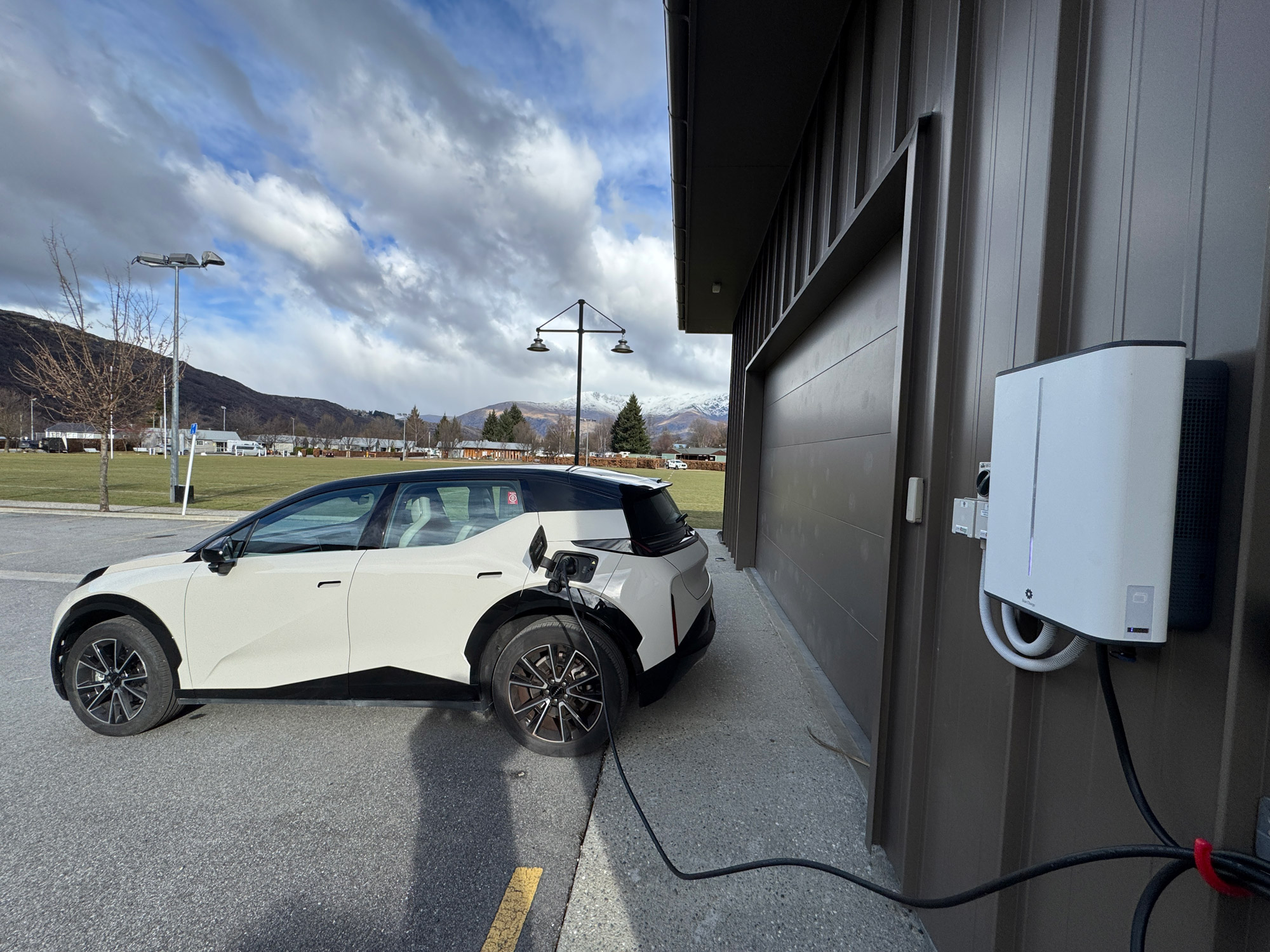
Vehicle-to-Grid Trial
Join New Zealand’s largest vehicle-to-grid trial and explore how your EV could help power your home or business.
Learn More
QEA Support
Get expert support to identify, assess and deliver electrification projects, from initial advice through to business cases, feasibility studies and implementation.
Learn MoreIt can. EVs can have significantly lower energy and maintenance costs than petrol or diesel vehicles. For vehicles that travel frequently, these operational savings can make a strong contribution to the overall business case. The best way to compare options is to look at the total cost of ownership over the period you expect to keep the vehicle.
For many businesses, the most convenient and cost-effective option is to charge vehicles wherever they are parked for long periods, whether that is at your workplace, depot or an employee’s home.
If employees take business vehicles home, they can charge overnight and be reimbursed for the electricity used. Smart chargers, plugs and charging software can help track electricity consumption, making it easier to separate business vehicle charging from household energy use and reimburse employees accordingly.
The right charging setup will depend on your fleet, how each vehicle is used and where it spends the most time parked.
Not necessarily. Many fleet vehicles can recharge using lower-powered chargers while they are parked overnight or between shifts. Understanding how long each vehicle is stationary can help avoid investing in more charging capacity than your business actually needs.
Many new EVs now offer substantial driving ranges, making them suitable for a wide range of business uses. The range available will depend on the vehicle you choose, as well as factors such as driving conditions, load and temperature.
Looking at your fleet’s actual daily travel patterns can help you choose an EV with the right range for your business.
Not always. Smart charging can manage when and how quickly vehicles charge, helping keep total demand within your existing electrical capacity. For larger fleets, assessing your site’s electrical capacity and charging requirements early is important.
Bi-directional charging allows compatible electric vehicles and chargers to send electricity stored in the vehicle battery back into a building or the electricity grid. This could allow businesses to use their fleet batteries for more than transport, including managing energy costs and supporting the wider electricity system.
The technology and compatible vehicle options are still developing, but it represents an exciting future opportunity for electric fleets. QEA are currently involved in NZ’s biggest Vehicle-to-grid trial.
Start by understanding your fleet. Look at how far each vehicle travels, when and where it is parked, what it needs to carry and your current fuel and maintenance costs. From there, you can identify the easiest vehicles to electrify and develop a transition plan that works for your business.
QEA provides independent advice to help your business identify and progress opportunities to electrify its vehicle fleet. Whether you’re just starting to explore which vehicles could be suitable for electrification, considering charging infrastructure, or need a detailed feasibility study or business case ready for board-level approval, we can support you through the process.
.avif)


.avif)