
Solar Finance
How to guide

Getting over the upfront cost barrier
Solar energy offers long term savings, reduced carbon emissions, and increased energy resilience. However, the upfront
cost can be a barrier.
This guide provides an overview of two primary financing pathways for homes & businesses looking to install solar panels.
Your solar finance options

Bank Loans
A bank loan allows you to borrow money to pay for the solar system upfront, then repay the loan over time with interest.
-2.avif)
Power Purchase Agreement
A third party installs and owns the solar system on your property. You agree to buy the electricity it produces at a fixed rate.

Option 1
Bank Loans
Solar energy offers long term savings, reduced carbon emissions, and increased energy resilience.
A bank loan lets you borrow money to pay for the solar system upfront, then repay the loan over time with interest. You own the system from day one and benefit from all electricity savings and export earnings. The types of loans available are:
- Green loans - offered by some banks for energy efficient upgrades, often with 0 to 1 percent interest.
- Home improvement loans - secured against your property with generally lower interest rates.
- Personal loans - unsecured and easier to access, but usually with higher interest rates.
Bank Loan Pros
- You own the system and all the benefits.
- Potential increase in property value.
- Long term savings once the loan is repaid.
Bank Loan Cons
- Requires good credit and financial stability.
- Monthly repayments may offset short term savings.
- You bear the maintenance and performance risk.

Home Loans

Business Loans
Option 2
Power Purchase Agreement
Under a PPA, a third party installs and owns the solar system on your property.
You agree to buy the electricity the system produces at a fixed rate, usually lower than your current grid electricity rate. Any money earned from exported solar is often shared between you and the third party, so you receive a lower export rate than what electricity retailers would normally pay.
How it works:
- There are no upfront costs.
- You pay per kWh of solar electricity you consume.
- The provider owns, maintains, and monitors the system.
PPA Pros
- No upfront investment.
- Lower electricity costs from day one.
- Maintenance and performance are handled by the provider.
PPA Cons
- You don’t own the system.
- Limited control over system design and upgrades.
- Long term contracts may have restrictions or escalation clauses.
- Often, a low price is paid to you for solar exported to the grid, as the export earnings are split between you and the third party.
- PPAs often include annual indexation, so the rate you pay the third party increases every year. If this increases faster than grid electricity, your annual savings will reduce over time.
We recomend options that let you own the solar on your roof.
Bank loan options maximise long-term savings, and you get to own the system outright.
Bank financing is the recommended first step for most consumers. Banks offer a range of loan products, including green loans with 0 to 1 percent interest rates for the first 2 to 5 years, that make solar ownership more accessible and financially attractive. After the initial term, these loans typically revert to standard mortgage loan rates, which may not suit everyone, but the long term benefits of owning the system outweigh the short term costs.
Consider a PPA only if financing is inaccessible and you still want to benefit from solar energy.
Discover more resources
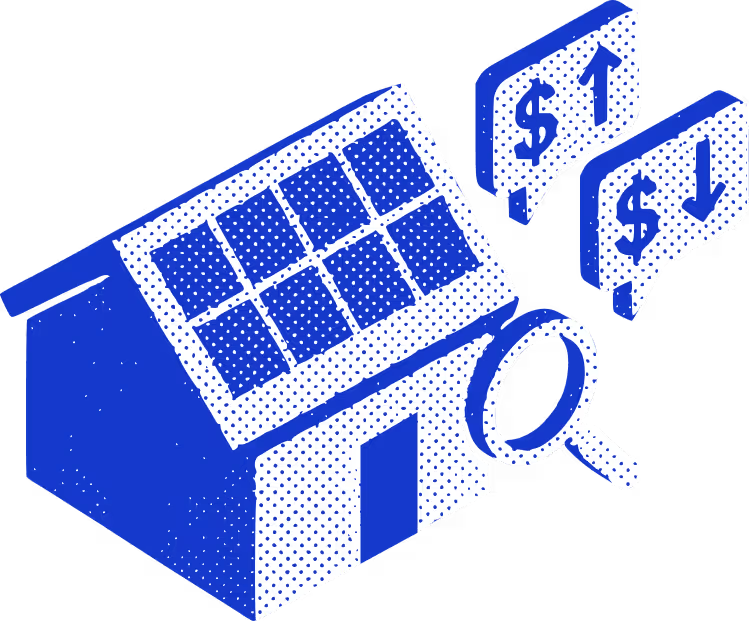
Solar Quote Comparison
Compare quotes side by side so you can see the best value for your home.

Household EV Guide
A step-by-step guide on everything you need to know before getting your first EV at home

Solar Step by Step Guide
Your easy roadmap to choosing the right solar setup for your home and budget.
-3.avif)
Solar Financing Guide
A clear breakdown of ways to pay for solar, from loans to grants, so you can pick what fits your situation.
.avif)
Solar for Renters Guide
Smart electrification tips for renters, including upgrades you can make without owning the place.
EV and Fleet Conversion
A straightforward guide to shifting your work vehicles to electric, with insights on savings and day to day operations.